
Rock Mechanics Engineer Resume Template
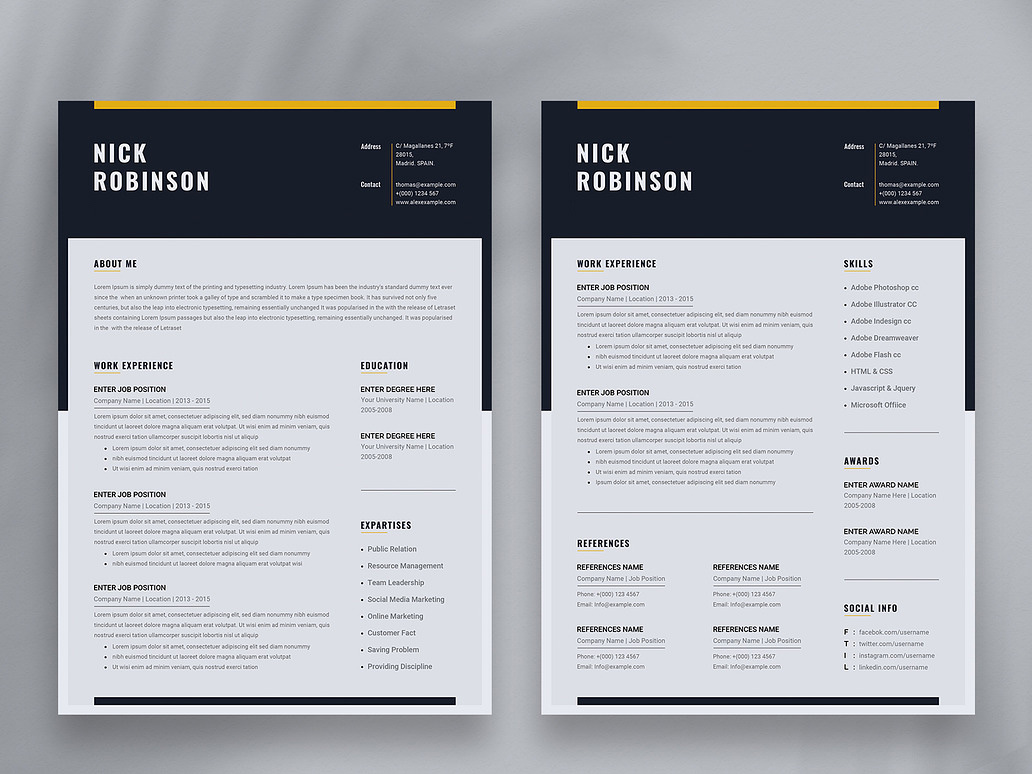
Understanding how rock masses respond to excavation, loading, and changing geological conditions is essential to the safety and performance of mining and infrastructure projects. Rock mechanics engineers apply engineering principles to assess ground behavior, evaluate structural conditions, and develop solutions that help maintain stable excavation environments.
Their work can involve underground mine openings, open-pit slopes, tunnels, foundations, and other structures built within or through rock formations. It requires a combination of analytical expertise, field investigation experience, numerical modeling knowledge, and practical engineering judgment.
The Rock Mechanics Engineer Resume Template is designed for professionals working in these specialized areas. Its clean, organized presentation provides a practical way to communicate geotechnical qualifications, technical projects, software knowledge, and professional achievements. Whether you are pursuing a position in mining, civil infrastructure, tunneling, or engineering research, this editable CV offers a professional foundation for presenting your experience.
Communicate Your Expertise in Rock Engineering
Recruiters and engineering managers need to understand how candidates assess geological conditions and translate technical findings into practical recommendations. A strong resume should demonstrate both analytical capabilities and experience applying engineering principles to real project environments.
Use the template to highlight relevant experience in areas such as:
- Rock mass classification and characterization
- Geological and geotechnical site investigations
- Rock slope stability assessment
- Underground excavation design
- Ground support and reinforcement systems
- Rock stress and deformation analysis
- Numerical simulation of rock mass behavior
- Tunnel stability and support evaluation
- Seismic hazard and rockburst risk assessment
- Geotechnical instrumentation and monitoring
- Excavation performance evaluation
- Ground control strategy development
These areas of expertise are relevant to engineers involved in mine design, underground construction, tunneling, slope engineering, and geotechnical consulting.
When describing your experience, explain the engineering problem, the methods you applied, and the recommendations or outcomes associated with your work. For example, a project description might discuss how you evaluated a rock mass classification system to support excavation support selection or contributed to a slope monitoring program for an active mining operation.
Career Opportunities in Rock Mechanics and Geotechnical Engineering
Rock mechanics specialists work across several industries where the mechanical behavior of geological materials affects design, construction, and operational safety.
This template can be customized for a range of professional positions, including:
- Rock Mechanics Engineer
- Rock Engineering Specialist
- Geotechnical Engineer
- Mine Geotechnical Engineer
- Ground Control Engineer
- Geomechanics Engineer
- Rock Slope Stability Engineer
- Underground Excavation Engineer
- Tunnel Design Engineer
- Geological Engineer
- Civil Geotechnical Engineer
- Geotechnical Project Engineer
- Infrastructure Geotechnical Specialist
- Engineering Consultant
- Geotechnical Research Engineer
It is suitable for applications with mining companies, underground construction contractors, geotechnical consulting firms, transportation infrastructure developers, engineering research organizations, and government agencies.
Although the underlying engineering principles may overlap, each industry has different priorities. Mining positions may emphasize ground control and excavation stability, while tunneling and infrastructure roles may place greater importance on geological investigations, support systems, and construction-stage monitoring.
Technical Skills That Demonstrate Engineering Capability
A dedicated technical skills section makes it easier for recruiters to identify your specialist knowledge. Rather than listing every engineering activity you have encountered, organize your competencies around the disciplines most relevant to your target position.
Rock mass and geological assessment
- Rock mass classification
- Geological structural mapping
- Discontinuity characterization
- Geotechnical site investigation
- Rock quality assessment
Geomechanical analysis
- Rock stress evaluation
- Deformation analysis
- Rock mass behavior assessment
- Excavation stability evaluation
- Geomechanical interpretation
Ground support and excavation engineering
- Rock bolt and cable bolt design
- Shotcrete support systems
- Excavation support assessment
- Tunnel stability analysis
- Ground reinforcement planning
Geotechnical monitoring and risk
- Slope movement monitoring
- Underground convergence monitoring
- Seismic hazard assessment
- Geotechnical risk evaluation
- Instrumentation data interpretation
The most effective skills section reflects your actual professional experience. If you have worked with particular investigation methods, monitoring instruments, or analytical approaches, identify them where they are relevant to the vacancy.
Present Your Engineering Projects Effectively
Project experience is especially valuable in rock mechanics because it demonstrates how theoretical knowledge is applied to complex geological conditions. Employers may want to know whether you have participated in site investigations, developed engineering models, assessed excavation behavior, or supported construction and mining operations.
Use your employment and project sections to describe contributions such as:
- Conducting rock mass assessments for underground mine development
- Evaluating slope stability conditions in open-pit mining areas
- Preparing geotechnical recommendations for tunnel excavation
- Supporting the selection and evaluation of ground support systems
- Analyzing stress redistribution around underground openings
- Interpreting monitoring data to assess ground movement
- Participating in geological and geotechnical investigation programs
- Developing numerical models for excavation design studies
- Supporting ground control procedures and technical reviews
- Preparing engineering reports and design recommendations
Where appropriate, include project scale, geological setting, analytical methods, and the software used. You can also mention measurable outcomes, such as improvements in monitoring coverage, reductions in identified risks, or successful completion of engineering assessments.
Avoid disclosing confidential project information. Focus on the technical contribution and the professional responsibilities you can discuss with prospective employers.
Editable Resume Files Included
The package contains multiple editing formats, allowing you to customize the document using a familiar application.
Included files:
- Microsoft Word (.DOCX): For editing personal details, work history, education, and technical qualifications.
- Microsoft PowerPoint (.PPT): An alternative format for adjusting text and visual layout elements.
- Adobe Photoshop (.PSD): Provides an editable layered design for more detailed visual customization.
- Adobe Illustrator (.EPS): Supports vector-based editing of graphics and layout components.
- Detailed Editing Instructions: Helps guide the customization process.
- Free Font Links: Provides access to the fonts used in the template.
This range of formats is useful for professionals who want flexibility when preparing a resume for different employers and application requirements.
Design Features for a Professional Engineering CV
Technical resumes need to present detailed information without making the document difficult to navigate. The template combines a clean engineering-oriented appearance with an organized structure for career information.
Its key specifications include:
- International A4 paper size
- CMYK print-ready files
- 300 DPI high resolution
- Fully editable text and graphics
- Organized layer structure
- ATS-conscious formatting
- Professional typography
- Free font support
- Clean and contemporary engineering layout
- Compatibility with multiple editing applications
The design supports both digital presentation and professional printing. For recruitment portals that process resumes automatically, consider using the Word version and keeping the content structure straightforward. Use standard section headings, selectable text, and a logical reading order. No visual template can guarantee successful parsing across every ATS platform, so review the final document before submitting it.
Geotechnical Software and Technical Applications
Software proficiency can be an important consideration when recruiting rock mechanics and geotechnical engineering specialists. Depending on the position, employers may seek experience with numerical modeling, geological interpretation, slope analysis, or underground excavation design tools.
When relevant to your background, consider highlighting applications such as:
- Rocscience RS2: Used for finite element analysis of underground and surface geotechnical problems.
- Rocscience RS3: Supports three-dimensional numerical modeling of geotechnical conditions.
- Rocscience Slide2: Applied to two-dimensional slope stability analysis.
- Rocscience Slide3: Used for three-dimensional slope stability assessment.
- Rocscience Dips: Supports the analysis of orientation-based geological structural data.
- FLAC3D: Used for three-dimensional numerical modeling of geomechanical behavior.
- PLAXIS: Applied in geotechnical analysis and numerical modeling for infrastructure and ground engineering projects.
- UnWedge: Used to evaluate structurally controlled wedge stability in underground excavations.
Software requirements differ between employers and project types. Include only tools you have used and be prepared to explain the type of analysis or engineering work you performed with them.
Customize Your Resume for the Position
A rock mechanics engineer working in underground mining may have a different professional profile from a specialist involved in highway tunnels, hydropower projects, or large civil infrastructure developments. Your resume should reflect the specific technical demands of the role.
Before submitting an application, review these sections:
- Professional Summary: Introduce your engineering background, specialization, and relevant project experience.
- Employment History: Explain your responsibilities in geological assessment, geomechanical analysis, excavation design, or ground control.
- Technical Competencies: Highlight the analytical methods, investigation techniques, and engineering disciplines relevant to the vacancy.
- Software Proficiency: List the geotechnical and numerical modeling applications you can use.
- Project Portfolio: Include significant mining, tunneling, slope engineering, or infrastructure assignments.
- Education: Present your degree in mining engineering, geological engineering, civil engineering, or another relevant discipline.
- Certifications and Professional Development: Include applicable professional registrations, technical training, and safety qualifications.
- Research and Publications: If relevant, feature academic research, technical papers, and conference contributions.
For consulting and research positions, publications and technical reports may be particularly valuable. For operational mining roles, emphasize field experience, practical ground control decisions, and collaboration with production teams.
Compatible Editing Software
The template supports customization through the following applications:
- Microsoft Word
- Microsoft PowerPoint
- Adobe Photoshop
- Adobe Illustrator
Choose the format that best matches your editing preferences. Word provides a practical option for conventional recruitment documents, while Photoshop and Illustrator offer additional control over visual elements. PowerPoint provides another way to adjust the supplied layout.
The included instructions and font links help simplify the editing process. Once customization is complete, check the final document for alignment, font consistency, spelling, and correct contact information.
Make Your Geotechnical Experience Stand Out
Rock mechanics engineers contribute to some of the most technically challenging projects in mining and infrastructure. Their ability to understand rock mass behavior, evaluate excavation conditions, and recommend appropriate engineering solutions is essential to managing geotechnical uncertainty.
The Rock Mechanics Engineer Resume Template provides a professional framework for communicating these capabilities. With editable file formats, an organized layout, and space for specialized engineering experience, it helps you present your technical knowledge and project contributions in a clear, focused way.
Whether your next career step involves mine ground control, tunnel engineering, slope stability, or geotechnical consulting, build your resume around the projects and expertise that best demonstrate the value of your engineering work.


Related Products


Same Contributor


Featured Products


