
Ventilation Engineer Resume Template
Ventilation engineering is essential to maintaining safe, comfortable, and productive environments across mining, construction, manufacturing, and commercial infrastructure. Whether designing airflow networks for underground operations or developing HVAC systems for large buildings, ventilation engineers apply mechanical and environmental engineering principles to control air movement, manage contaminants, and maintain appropriate working conditions.
The role requires a combination of technical design knowledge, analytical capabilities, system optimization, and an understanding of occupational health and safety requirements. Employers want to see evidence that candidates can evaluate ventilation performance, solve engineering problems, and contribute to reliable operations.
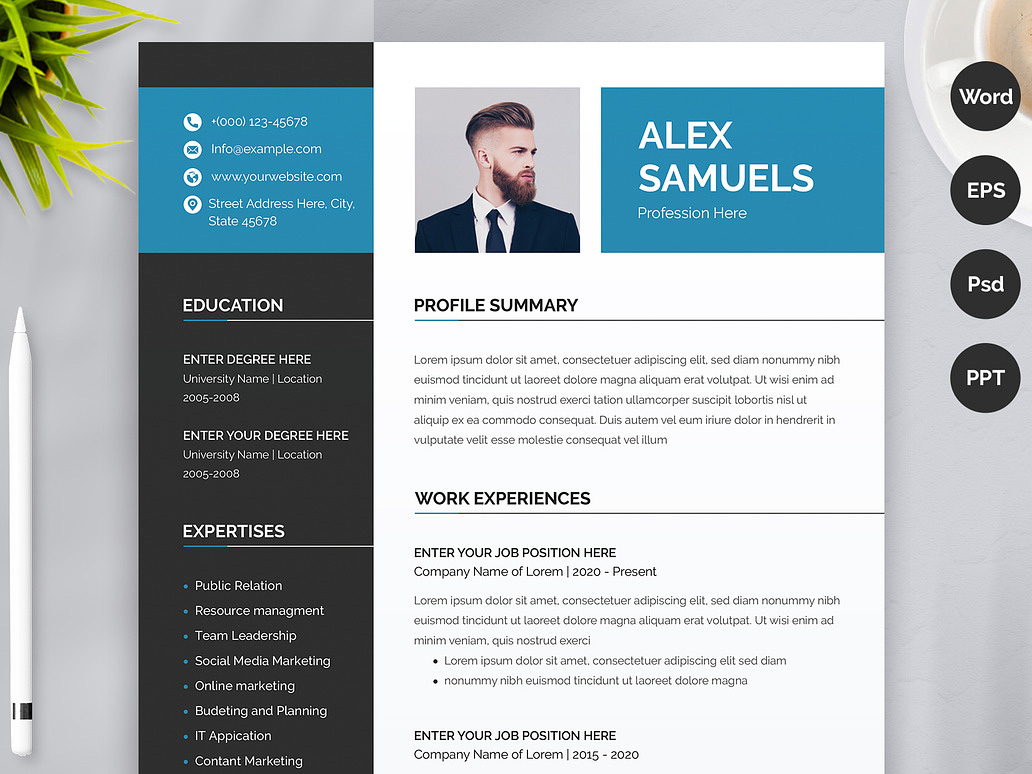
The Ventilation Engineer Resume Template provides a professional way to present these qualifications. Its structured layout helps organize your engineering background, technical skills, project experience, software proficiency, and professional credentials. With multiple editable file formats, it can be customized for applications across mining companies, HVAC contractors, engineering consultancies, infrastructure developers, and industrial organizations.
Present Your Expertise in Ventilation Systems
Ventilation engineers work with systems that directly influence air quality, temperature control, worker safety, and operational efficiency. Depending on the industry, their responsibilities may involve underground airflow distribution, mechanical ventilation equipment, building air-conditioning systems, or industrial exhaust installations.
Use the resume template to highlight relevant experience in areas such as:
- Underground mine ventilation design and planning
- Ventilation network modeling and analysis
- Airflow measurement and distribution assessment
- Main and auxiliary ventilation fan selection
- Dust suppression and hazardous gas control
- HVAC system design and evaluation
- Ventilation surveys and performance inspections
- Industrial exhaust and air filtration systems
- Heat load and cooling requirement calculations
- Environmental and workplace air-quality monitoring
- Emergency ventilation system planning
- Energy consumption and system efficiency improvements
- Ventilation equipment maintenance coordination
- Occupational health and safety compliance
These competencies help demonstrate your ability to develop, evaluate, and maintain ventilation systems in technically demanding environments.
When describing your professional experience, explain the engineering challenges you addressed. For example, you might highlight improvements to airflow distribution in an underground mine, the evaluation of ventilation fan performance, or an HVAC upgrade designed to improve indoor environmental conditions.
Career Opportunities Across Different Industries
Ventilation engineering skills are relevant to several sectors, although the technical priorities can vary significantly between them. Underground mining focuses heavily on airflow distribution, gas dilution, heat management, and emergency arrangements. Building services engineering places greater emphasis on indoor air quality, thermal comfort, HVAC performance, and energy consumption.
This template can be adapted for positions such as:
- Ventilation Engineer
- Mine Ventilation Engineer
- Underground Ventilation Specialist
- HVAC Design Engineer
- Industrial Ventilation Engineer
- Tunnel Ventilation Engineer
- Mechanical Design Engineer
- Environmental Engineer
- Building Services Engineer
- Facilities Engineering Specialist
- Process Ventilation Engineer
- Mining Technical Services Engineer
- Health, Safety and Environment Engineer
- Engineering Project Engineer
- Ventilation Systems Consultant
It is suitable for applications with mining operators, HVAC engineering firms, construction contractors, industrial manufacturers, infrastructure companies, and multidisciplinary engineering consultancies.
For a more targeted application, adjust your professional summary and technical skills to match the employer’s operating environment. A mine ventilation vacancy should emphasize underground airflow, ventilation networks, and gas monitoring, while an HVAC position should highlight building systems, thermal calculations, and energy performance.
Technical Skills That Strengthen Your Engineering Profile
A well-organized skills section helps recruiters identify your specialist knowledge quickly. Rather than presenting a long collection of unrelated terms, group your abilities according to the engineering work you perform.
Mine ventilation engineering
- Underground ventilation network design
- Primary and auxiliary ventilation planning
- Airflow distribution analysis
- Ventilation pressure and resistance assessment
- Mine ventilation surveys
- Emergency ventilation planning
HVAC and mechanical systems
- HVAC system design
- Air distribution and ductwork
- Mechanical ventilation equipment
- Cooling and heating load calculations
- Ventilation fan selection
- System performance evaluation
Environmental and safety management
- Dust and gas monitoring
- Workplace air-quality assessment
- Heat stress and thermal environment evaluation
- Industrial exhaust systems
- Occupational health and safety procedures
- Environmental compliance monitoring
Engineering analysis and project delivery
- Airflow modeling
- Ventilation system simulation
- Technical calculations and reporting
- Engineering design reviews
- Equipment performance analysis
- Project coordination and documentation
Include only skills that reflect your qualifications and practical experience. If you have worked with specific ventilation systems, measurement instruments, or modeling applications, identify them where they are relevant to the position.
Demonstrate Your Contribution Through Engineering Projects
Project experience can distinguish your resume from applications that focus exclusively on general responsibilities. Employers want to understand the complexity of the systems you have worked with and the contribution you made to their design, installation, evaluation, or improvement.
Consider highlighting achievements involving:
- Developing ventilation plans for underground mining operations
- Evaluating airflow distribution across production and development areas
- Supporting the installation or upgrade of ventilation fans
- Conducting ventilation surveys and interpreting measurement results
- Assessing dust and gas control measures in industrial environments
- Designing mechanical ventilation arrangements for tunnels
- Reviewing HVAC system performance in commercial facilities
- Evaluating cooling requirements for high-temperature working environments
- Identifying opportunities to reduce ventilation energy consumption
- Coordinating ventilation equipment installation and commissioning
Where possible, support your descriptions with measurable information. Examples include airflow volumes, fan capacities, pressure measurements, system coverage, energy savings, or documented improvements in air-quality performance.
Make sure the figures are accurate and that your contribution is clearly distinguished from the work of the wider engineering team.
Editable Resume Files Included
The template is provided in several formats to accommodate different editing preferences and software environments.
Your package includes:
- Microsoft Word (.DOCX): Suitable for updating personal details, employment history, qualifications, and technical skills.
- Microsoft PowerPoint (.PPT): Provides an alternative way to modify text and visual layout elements.
- Adobe Photoshop (.PSD): Offers a layered design for more detailed graphic customization.
- Adobe Illustrator (.EPS): Supports vector-based editing of visual elements and document components.
- Detailed Instruction Guide: Provides guidance for editing and customizing the template.
- Free Font Links: Included in the documentation to help you access the required typefaces.
The different formats allow you to choose the editing environment that best suits your workflow while maintaining a consistent professional presentation.
Design Features for a Professional Engineering CV
Engineering resumes often contain technical terminology, project descriptions, certifications, and software information. A clear visual structure helps ensure that these details remain accessible to recruiters and hiring managers.
The template combines a modern design with practical document specifications, including:
- International A4 paper size with bleed
- 300 DPI high-resolution design
- CMYK color mode for professional printing
- Fully editable text and graphic elements
- Clearly organized and labeled layers
- ATS-conscious resume structure
- Professional typography
- Free font support
- Easy customization
- Print-ready files
These features support both digital applications and printed copies. For recruitment platforms that use automated screening, the Word version may be preferable when a conventional document is requested. Keep the section structure straightforward, use recognizable headings, and check that text remains selectable and follows a logical reading order. ATS compatibility ultimately depends on the software used by the employer and the structure of the completed document.
Ventilation Engineering Software and Technical Tools
Software proficiency can be an important requirement for ventilation engineering positions, particularly in mine planning, HVAC design, airflow simulation, and system performance analysis.
Depending on your specialization, relevant applications may include:
- Ventsim DESIGN: Used for underground mine ventilation network modeling, simulation, and analysis.
- VENTGRAPH: Supports mine ventilation network simulation and engineering analysis.
- AutoCAD: Used to prepare ventilation layouts, mechanical drawings, and engineering documentation.
- Revit: Supports building information modeling and the design of building services systems.
- HAP (Hourly Analysis Program): Used for HVAC load calculations and building system analysis.
- ANSYS Fluent: Supports computational fluid dynamics simulations involving airflow and heat transfer.
- SolidWorks: Used for mechanical design and equipment-related engineering work.
- Microsoft Excel: Useful for engineering calculations, performance analysis, and technical reporting.
Choose applications that match your actual experience. You can strengthen this section by explaining how you used a particular tool, such as modeling a mine ventilation network, evaluating HVAC loads, or preparing mechanical system drawings.
Customize Your Resume for Specific Engineering Roles
A ventilation engineer working in underground mining may have a different professional profile from someone designing HVAC systems for hospitals, factories, or commercial buildings. Tailoring your resume helps ensure that the most relevant qualifications receive attention.
Review the following sections before applying:
- Professional Summary: Introduce your engineering background, industry experience, and ventilation specialization.
- Employment History: Describe your involvement in system design, installation, monitoring, maintenance, or optimization.
- Technical Competencies: Prioritize skills relevant to the employer’s ventilation requirements.
- Software Proficiency: List modeling, drafting, simulation, and calculation applications you have used.
- Project Experience: Include significant mine ventilation, HVAC, tunnel, or industrial air-management projects.
- Certifications and Training: Add relevant engineering registrations, safety qualifications, and specialist training.
- Education: Present your mechanical, mining, environmental, or other relevant engineering qualifications.
- Professional Achievements: Highlight improvements in airflow, system reliability, environmental conditions, safety, or energy performance.
For graduate engineers, academic projects, internships, laboratory experience, and relevant technical coursework can help demonstrate professional potential. Experienced candidates should give greater attention to project responsibility, system complexity, leadership, and measurable results.
Compatible Editing Applications
The template supports customization using four popular applications:
- Microsoft Word
- Microsoft PowerPoint
- Adobe Photoshop
- Adobe Illustrator
Word offers a practical option for preparing conventional recruitment documents. PowerPoint provides another environment for adjusting the layout, while Photoshop and Illustrator offer greater control over visual elements.
The included instruction guide helps simplify the editing process. Once your information has been added, review the document carefully to ensure that fonts, spacing, alignment, and contact details are consistent.
Present Your Ventilation Engineering Experience with Confidence
Ventilation engineers contribute to the safety, performance, and efficiency of environments where controlled air movement is essential. From underground mine ventilation networks to industrial extraction systems and commercial HVAC installations, their work combines technical design with practical engineering problem-solving.
The Ventilation Engineer Resume Template gives you an organized foundation for presenting this experience. Its editable formats, professional layout, and dedicated sections for technical skills and project achievements help you communicate your qualifications clearly.
Whether you are pursuing a role in mining, tunnel construction, building services, or industrial engineering, focus your resume on the systems you have worked with, the challenges you have addressed, and the improvements you have helped deliver.
Related Free Resume Template


Related Products


Same Contributor


Featured Products


