
Mining Engineer Resume Template
Mining engineering combines technical planning, operational management, geological knowledge, and safety considerations to support the responsible extraction of mineral resources. From designing underground mine layouts to optimizing open-pit production, engineers must make decisions that balance productivity, operational costs, worker safety, and environmental requirements.
Recruiters in the mining sector look for candidates who can demonstrate practical engineering knowledge alongside experience working with complex projects and multidisciplinary teams. They want to understand the operations you have supported, the technical methods you have applied, and the improvements you have helped deliver.
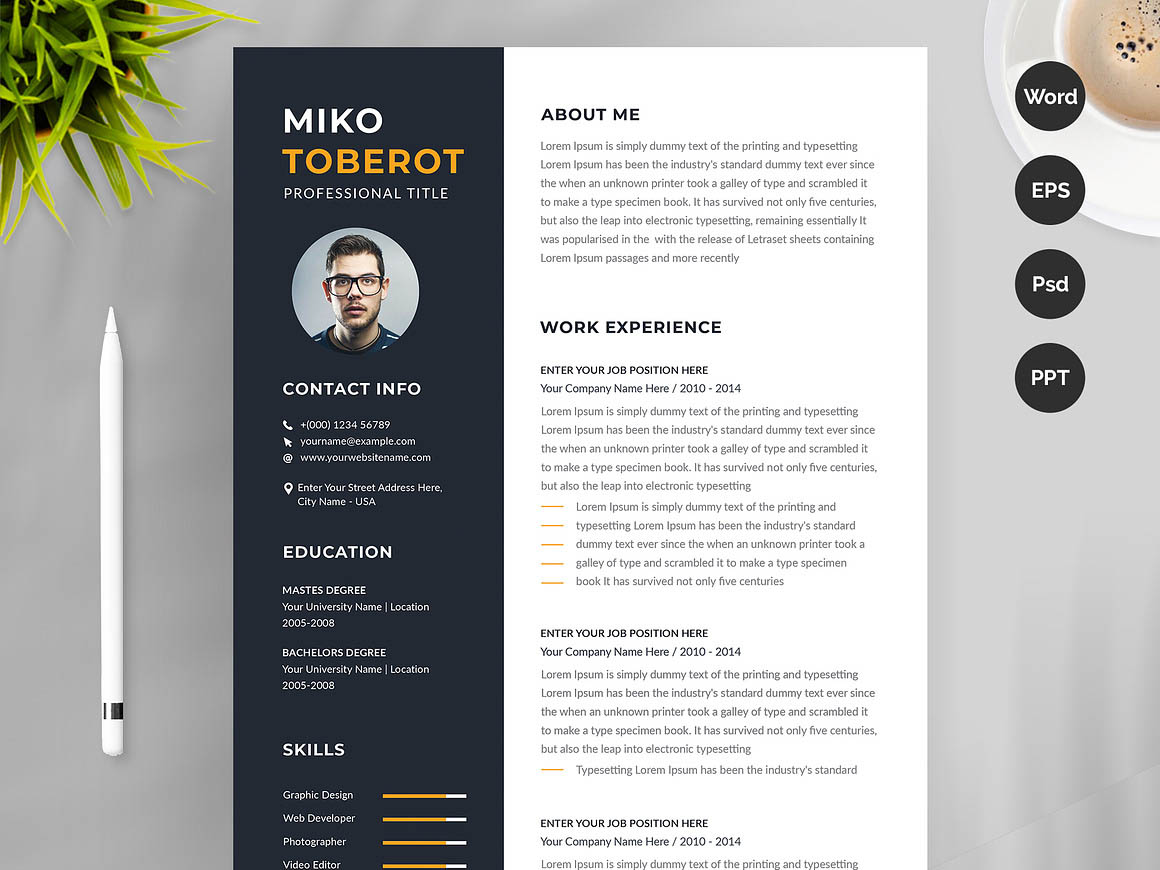
The Mining Engineer Resume Template provides a structured professional layout for presenting these qualifications. Its modern corporate design helps organize engineering experience, technical competencies, project achievements, and professional credentials into a clear document suitable for mining companies, engineering consultancies, contractors, and resource development organizations.
Put Your Engineering Capabilities at the Forefront
Mining engineering covers several technical disciplines, and the requirements can differ significantly between underground operations, surface mines, mineral processing facilities, and exploration projects.
A well-prepared resume should make your specialization easy to identify. Use the available sections to highlight experience in areas such as:
- Mine Planning and Design: Production scheduling, mine layouts, pit optimization, and long-term development planning.
- Underground Mining: Stope design, development planning, ground support, and underground production operations.
- Open-Pit Operations: Pit design, bench planning, haulage systems, and production optimization.
- Drill and Blast Engineering: Blast pattern design, fragmentation analysis, drilling programs, and explosives planning.
- Mineral Processing: Ore handling, processing operations, recovery optimization, and plant performance.
- Geotechnical Engineering: Ground stability, slope analysis, rock mechanics, and geotechnical investigations.
- Resource Evaluation: Geological interpretation, mineral resource estimation, and reserve assessment.
- Mine Safety and Environment: Operational risk management, safety procedures, environmental monitoring, and regulatory compliance.
Candidates should emphasize the technical areas that reflect their actual experience and align with the requirements of their target positions.
Demonstrate the Results Behind Your Mining Projects
Mining employers often evaluate candidates through their involvement in operational projects and the practical results they have achieved. Describing responsibilities is useful, but explaining the scale and impact of engineering work provides a stronger picture of professional capability.
Consider highlighting achievements in the following areas.
Production and Operational Performance
Show how you contributed to production planning, equipment utilization, operational efficiency, or improvements in mining processes. Where appropriate, include production volumes, productivity indicators, or project timelines.
Mine Design and Technical Planning
Describe experience preparing mine layouts, developing extraction sequences, evaluating mining methods, or supporting feasibility studies. Mention the engineering software and technical methods used when relevant.
Safety and Risk Management
Include work involving ground control, hazard identification, ventilation planning, operational inspections, safety assessments, and implementation of risk mitigation measures.
Cost and Resource Optimization
Highlight contributions to reducing operational costs, improving resource recovery, optimizing drilling and blasting activities, or evaluating alternative mining strategies.
Project Coordination
Present experience coordinating contractors, supervising engineering activities, working with geological teams, or supporting project delivery across multiple departments.
Use measurable information where possible, but ensure that production figures, cost savings, and performance improvements accurately represent your contribution.
Download Package and Editable File Formats
The template comes with multiple file formats, allowing mining professionals to customize their resumes using familiar office applications or professional design software.
Included files:
- Microsoft Word (.DOCX)
- Microsoft PowerPoint (.PPT)
- Adobe Photoshop (.PSD)
- Adobe Illustrator (.AI/.EPS)
- Detailed Instruction Guide
- Free Font Links
Each format contains editable elements, making it possible to personalize the content while maintaining a consistent professional appearance.
The included guide provides instructions for editing the files, while the font links help you access the typefaces used in the design. This makes the package suitable for both experienced designers and professionals who simply want to update their career information.
Professional Design Specifications
Engineering resumes often contain detailed technical information, certifications, project descriptions, and software competencies. A clear layout helps recruiters review these qualifications without unnecessary distractions.
The template incorporates the following specifications:
- A4 international paper size with bleed
- CMYK print-ready format
- 300 DPI resolution
- Fully editable text
- Organized design layers
- ATS-conscious layout
- Professional typography
- Free font resources
- Modern engineering design
- Multi-platform compatibility
Its structured presentation is intended to support both digital recruitment applications and printed documents. The editable format also allows users to adjust section order, colors, and content according to their career background.
ATS performance can vary depending on the recruitment platform and the final exported file. After editing, check that text remains selectable and that headings, employment details, and qualifications follow a logical reading order. Consider preparing a simplified text-based version when an employer specifically requests one.
Career Opportunities Across Mining and Natural Resources
The design can be adapted for different positions throughout the mining lifecycle, from exploration and technical planning to production management and mineral processing.
Mine Planning and Production Engineering
- Mining Engineer
- Graduate Mining Engineer
- Senior Mining Engineer
- Mine Planning Engineer
- Underground Mining Engineer
- Open Pit Mining Engineer
- Mining Production Engineer
- Mine Development Engineer
Drilling, Blasting, and Geotechnical Engineering
- Drill and Blast Engineer
- Geotechnical Engineer
- Rock Mechanics Engineer
- Ground Control Engineer
- Blasting Engineer
- Slope Stability Engineer
- Underground Ground Support Engineer
Mineral Processing and Resource Evaluation
- Mineral Processing Engineer
- Geological Engineer
- Resource Estimation Engineer
- Mineral Resource Specialist
- Ore Processing Engineer
- Metallurgical Process Engineer
- Mineral Exploration Engineer
Operations, Safety, and Project Management
- Mining Operations Supervisor
- Mine Safety Engineer
- Mining Project Engineer
- Quarry Engineer
- Mine Technical Services Engineer
- Mining Construction Engineer
- Mine Operations Manager
These roles may require different combinations of technical qualifications, field experience, and professional certifications. Tailor your resume to the specific vacancy and highlight the mining methods, commodities, equipment, or project environments most relevant to the employer.
Technical Skills and Software for Mining Engineers
Technical competencies are particularly important in mining recruitment. Employers may look for experience with mine design, geological interpretation, engineering calculations, production planning, and specialized software.
Consider organizing your skills into the following categories.
Mine Planning and Engineering
- Short-term and long-term mine planning
- Underground mine design
- Open-pit optimization
- Production scheduling
- Mining method selection
- Feasibility studies
- Mine development planning
Drilling, Blasting, and Geotechnical Analysis
- Drill and blast design
- Rock mechanics
- Ground support assessment
- Slope stability analysis
- Geotechnical investigations
- Ventilation planning
- Ground control monitoring
Geology and Mineral Processing
- Geological interpretation
- Resource estimation
- Reserve evaluation
- Ore characterization
- Mineral processing analysis
- Recovery optimization
- Mine-to-mill coordination
Safety and Environmental Management
- Mine risk assessments
- Occupational health and safety
- Environmental compliance
- Operational inspections
- Hazard identification
- Emergency response planning
- Safety management systems
Mining Software and Digital Tools
Depending on your experience, relevant applications may include:
- Deswik
- Surpac
- Datamine
- Micromine
- Vulcan
- MinePlan
- AutoCAD
- Rocscience
- Whittle
List only the applications you have used and indicate your level of proficiency accurately. Specific software experience can help demonstrate readiness for technical responsibilities, particularly when employers identify preferred applications in their job descriptions.
How to Adapt the Resume to Different Mining Employers
Mining companies, engineering consultancies, and contractors may evaluate candidates according to different operational priorities. A targeted resume should reflect the type of work and environment involved.
For underground mining positions: Emphasize mine development, stope design, ventilation, ground support, production scheduling, and underground safety experience.
For open-pit operations: Prioritize pit optimization, bench design, haul road planning, drilling and blasting, equipment productivity, and surface mine production.
For mineral processing roles: Highlight process engineering, plant performance, ore recovery, process optimization, and metallurgical analysis.
For exploration and resource development: Focus on geological interpretation, resource estimation, feasibility studies, drilling programs, and technical evaluation.
For mining project engineering: Demonstrate project coordination, contractor management, engineering documentation, cost control, scheduling, and collaboration across technical teams.
For graduate applicants, academic projects, internships, fieldwork, laboratory experience, and relevant engineering coursework can provide useful evidence of technical knowledge. Experienced professionals should give greater attention to completed projects, operational responsibilities, and measurable improvements.
Software Compatibility and Customization
The package supports four editing applications:
- Microsoft Word: Update your professional summary, employment history, education, certifications, and technical skills.
- Microsoft PowerPoint: Customize text and layout components using presentation software.
- Adobe Photoshop: Modify the PSD design and work with its organized layers.
- Adobe Illustrator: Edit the AI/EPS version using vector design tools.
The detailed instruction guide helps simplify the editing process. You can personalize the content, modify the visual elements, and prepare different resume versions for mining companies, contractors, and engineering consultancies.
Before submitting your application, check that project descriptions are accurate, technical terminology is consistent, and any production or cost figures are supported by your actual experience. Include relevant engineering licenses, safety qualifications, and professional certifications where applicable.
Present Your Engineering Experience With Confidence
Mining engineering demands the ability to solve complex technical problems while maintaining a strong focus on safety, operational performance, and responsible resource development. Your resume should communicate these qualities through practical project experience, relevant technical skills, and clearly presented achievements.
The Mining Engineer Resume Template provides a professional starting point for presenting that experience. With editable file formats, production-ready design specifications, and an accompanying instruction guide, it supports applications across mine planning, underground and open-pit operations, mineral processing, geotechnical engineering, and resource development.
Use the template to connect your engineering knowledge with the projects you have contributed to and the operational improvements you have helped achieve. A well-organized professional profile makes it easier for employers to recognize the technical value you can bring to their mining operations.


Related Products


Same Contributor


Featured Products


