
Private Equity Associate Resume
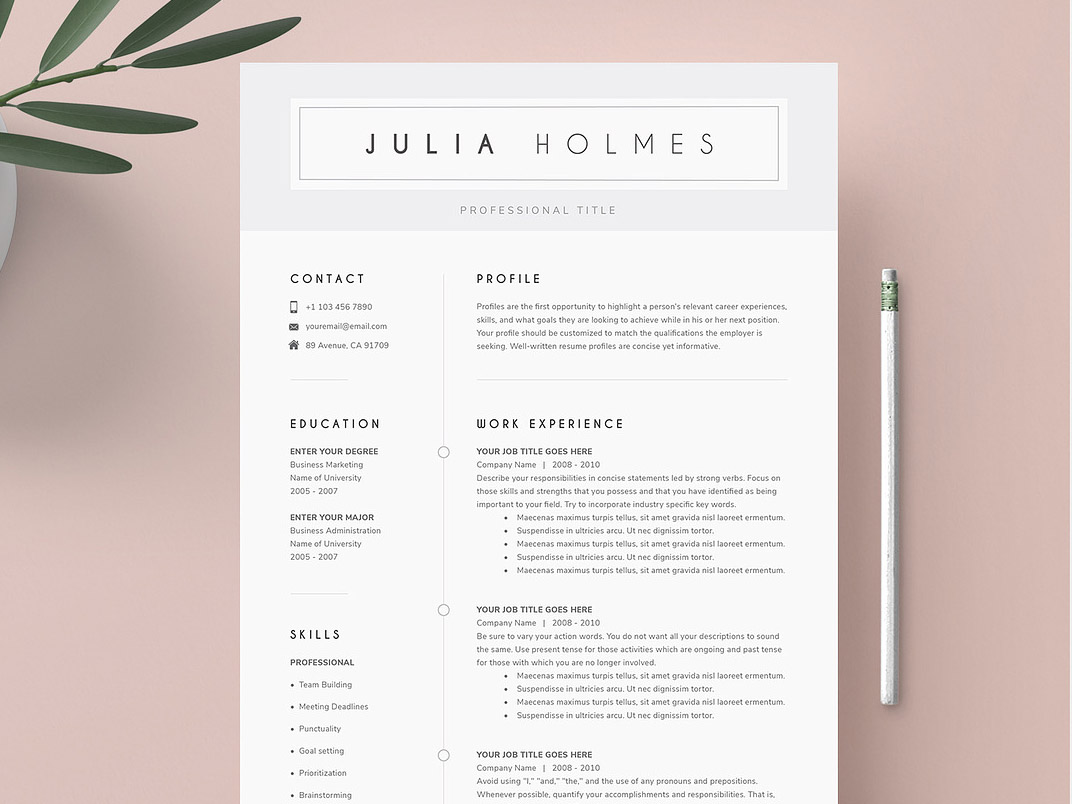
Private equity professionals work at the intersection of financial analysis, transaction execution, and business strategy. From evaluating acquisition opportunities to assessing portfolio company performance, their responsibilities require rigorous analytical thinking, commercial awareness, and sound investment judgment.
For candidates pursuing roles at private equity firms, investment banks, corporate development teams, and alternative investment funds, a well-structured resume can help communicate the experience and technical skills that matter most. The Private Equity Associate Resume Template offers a professional framework for presenting investment experience, financial modeling expertise, transaction exposure, and career achievements.
Available in Microsoft Word and Apple Pages formats, this resume package includes one-page and two-page versions, a matching cover letter, and a references template. These resources provide flexibility for finance professionals preparing applications at different stages of their careers.
Showcase Your Transaction and Investment Expertise
Private Equity Associates support investment decisions throughout the transaction process. Their work may involve screening acquisition targets, building financial models, conducting due diligence, preparing investment committee materials, and monitoring portfolio company performance.
This template helps organize experience across key areas of private equity and corporate finance, including:
- Financial modeling and valuation
- Leveraged buyout (LBO) analysis
- Mergers and acquisitions
- Financial and commercial due diligence
- Investment opportunity assessment
- Industry and competitive research
- Transaction structuring and execution support
- Portfolio company performance analysis
- Investment memorandum preparation
- Value creation and business improvement initiatives
When describing your experience, focus on the work you performed and the decisions your analysis supported. Examples might include developing an acquisition model, evaluating a target company’s earnings, preparing transaction materials, or analyzing potential operational improvements.
Where appropriate, include measurable results such as transaction values, portfolio performance indicators, or project outcomes. Only disclose information that you are permitted to share, and avoid including confidential client or transaction details.
What’s Included in the Resume Package?
The template provides a coordinated set of documents for preparing investment-related job applications.
- One-page resume (.DOCX and .PAGES): A concise option for presenting relevant qualifications and selected achievements.
- Two-page resume (.DOCX and .PAGES): Additional space for transaction experience, analytical projects, professional history, and technical skills.
- Matching cover letter (.DOCX and .PAGES): A supporting document for explaining your interest in a particular investment firm.
- References template (.DOCX and .PAGES): A separate format for organizing professional references when requested.
- A4 and US Letter sizes: Page formats for different application requirements.
- 22 professional icons: Optional visual elements for the resume design.
- Font guide: Instructions for working with the template’s typography.
- FAQ and help guide: Supporting documentation for customization.
- Customer support: Assistance included with the template package.
The availability of both one-page and two-page formats allows you to choose a layout that reflects your experience. A shorter resume may suit candidates with a focused transaction record, while a longer version can accommodate a broader history of deals, financial analysis, and portfolio-related work.
Editable in Microsoft Word and Apple Pages
The template supports two widely used document-editing environments, allowing you to personalize your application without rebuilding the design from scratch.
You can customize the documents by:
- Updating personal details and contact information
- Revising employment history and transaction experience
- Adding education, certifications, and professional development
- Adjusting colors and other editable design elements
- Rearranging sections to emphasize relevant expertise
- Tailoring the content for specific funds or investment strategies
- Personalizing the cover letter for individual employers
- Updating the references document when required
When working across Word and Pages, review the final layout after editing or converting files. Differences in fonts, spacing, and page rendering can affect how the document appears, so check headings, margins, bullet points, and page breaks before submitting an application.
Professional Formatting and ATS Considerations
Private equity recruitment can involve detailed screening by recruiters, investment professionals, and, in some organizations, applicant tracking systems. A clear resume structure helps communicate qualifications, but ATS compatibility depends on the document’s text structure and the software used by the employer.
To make the most of the template, follow these guidelines:
Use conventional headings. Sections such as Professional Experience, Education, Transaction Experience, and Technical Skills help readers locate relevant information quickly.
Prioritize technical competencies. Include terms such as LBO modeling, valuation, due diligence, and financial analysis when they accurately represent your experience.
Explain your contribution to transactions. Clarify whether you built financial models, coordinated due diligence, prepared investment materials, or supported negotiations. Avoid overstating your involvement in completed deals.
Keep essential details in text. Important qualifications should remain readable and accessible rather than appearing only in icons or decorative graphics.
Check the final document. Review the reading order, confirm that text remains selectable, and follow the employer’s requested file format. If a firm requires a simplified resume, use a straightforward version with minimal visual elements.
A sophisticated appearance can support a professional presentation, but the substance of your experience and the accuracy of your achievements remain more important than decorative styling.
Who Should Use This Private Equity Resume Template?
The template can be adapted for several finance and investment careers, depending on the candidate’s background and target position.
Private Markets and Investment Funds
- Private Equity Associate
- Private Equity Analyst
- Growth Equity Associate
- Investment Associate
- Alternative Investments Analyst
Transactions and Corporate Finance
- Mergers and Acquisitions Associate
- Corporate Development Analyst
- Transaction Advisory Associate
- Financial Due Diligence Analyst
- Acquisition Finance Analyst
Banking and Financial Analysis
- Investment Banking Associate
- Leveraged Finance Analyst
- Venture Capital Analyst
- Financial Modeling Specialist
- Corporate Finance Associate
Portfolio and Investment Strategy
- Portfolio Operations Associate
- Portfolio Performance Analyst
- Investment Strategy Associate
- Business Transformation Analyst
- Portfolio Value Creation Specialist
These positions require different combinations of technical knowledge, deal experience, and strategic capabilities. Candidates targeting buyout funds may emphasize LBO modeling, debt structures, and acquisition analysis. Those applying to portfolio operations teams may focus more on operating performance, cost optimization, growth initiatives, and business transformation.
How to Strengthen Your Private Equity Resume
1. Lead With Relevant Deal Experience
Organize your resume around the transactions, investment projects, and financial analyses most relevant to the target role. Where confidentiality permits, explain the transaction type, your responsibilities, and the analytical work you completed.
2. Demonstrate Financial Modeling Proficiency
Highlight experience with valuation methods, financial statement analysis, scenario modeling, cash flow projections, and leveraged buyout models where applicable. Describe how your analysis supported investment decisions rather than relying on a list of technical terms alone.
3. Explain Your Commercial Judgment
Private equity investing requires an understanding of business models, industry dynamics, competitive positioning, and potential sources of value creation. Include examples that show how you assessed market opportunities, identified risks, or evaluated growth assumptions.
4. Highlight Due Diligence and Transaction Support
Describe your involvement in financial, commercial, or operational due diligence. Relevant contributions may include analyzing earnings quality, reviewing working capital, examining business performance, or coordinating information for transaction decisions.
5. Include Relevant Education and Credentials
List your degrees, relevant professional qualifications, and technical training. Prioritize credentials that are pertinent to the role and accurately represent your professional status.
6. Tailor Your Cover Letter
Use the matching cover letter to connect your experience with the firm’s investment strategy, target sectors, or transaction focus. A specific explanation of your interest is generally more useful than a generic statement about wanting to work in private equity.
7. Select the Right Resume Length
Use the one-page version if you can present your most relevant experience clearly and concisely. Choose the two-page format when additional detail is necessary to explain your deal record, financial modeling projects, education, or career progression.
Prepare for Your Next Investment Opportunity
A strong Private Equity Associate resume should communicate more than financial expertise. It should demonstrate your ability to analyze businesses, evaluate investment risks, support transaction execution, and contribute to decisions that influence long-term value.
This editable resume package offers a practical foundation for presenting those qualifications, with one-page and two-page formats in Word and Apple Pages, a matching cover letter, and a references template. Customize the documents to the firm’s investment focus, prioritize your most relevant achievements, and ensure every statement accurately reflects your contribution.
With a focused resume and a tailored cover letter, you can present your transaction experience, analytical capabilities, and commercial understanding more effectively when pursuing opportunities across private equity and the broader investment industry.


Related Products


Same Contributor


Featured Products


