
Underwriter Resume Template
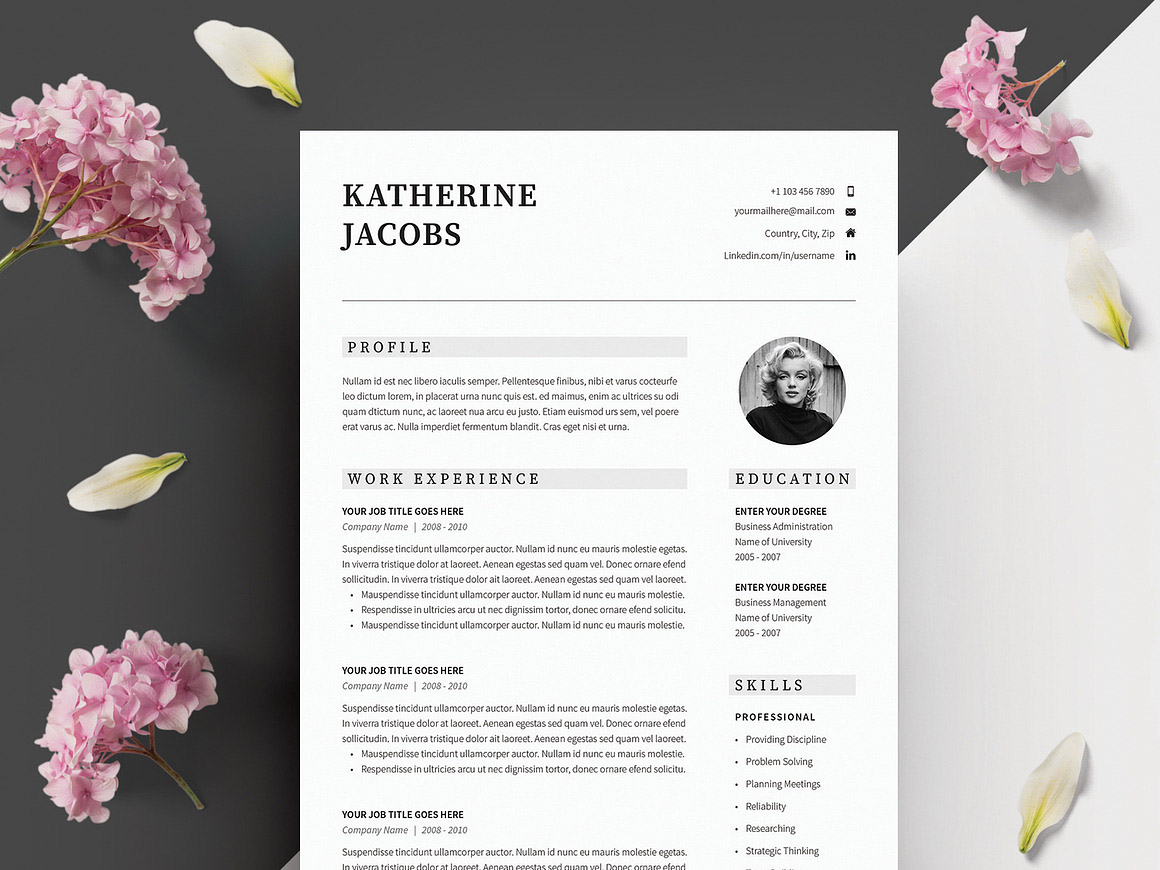
Underwriters help insurance companies, banks, mortgage lenders, and other financial institutions make informed decisions by evaluating applications and assessing potential risks. Their work requires analytical thinking, attention to detail, financial knowledge, and the ability to balance business objectives with established risk policies.
A professional resume should communicate these strengths while demonstrating relevant industry experience, technical expertise, and decision-making capabilities. The Underwriter Resume Template provides a structured starting point for presenting your qualifications in an organized, recruiter-friendly format.
Created for editing in Microsoft Word, this resume package includes a two-page resume, a matching cover letter, and a references template. These coordinated documents help you prepare a consistent application for opportunities across insurance, banking, mortgage lending, and financial services.
Highlight Your Underwriting and Risk Assessment Expertise
Underwriters examine applications, review supporting documents, analyze financial or insurance information, and determine whether a proposed risk meets established guidelines. Depending on their specialization, they may evaluate borrower creditworthiness, assess insurance exposure, review property information, or recommend appropriate coverage terms.
This resume template can help you showcase experience in areas such as:
- Risk evaluation and underwriting decisions
- Insurance policy assessment
- Credit analysis and borrower evaluation
- Financial statement interpretation
- Mortgage and commercial loan underwriting
- Regulatory compliance and internal risk policies
- Loan approval and documentation review
- Portfolio monitoring and risk management
- Client and broker relationship management
- Underwriting reports and decision support
Rather than simply listing these skills, explain how you have applied them in your work. For example, you might describe your experience reviewing complex applications, identifying inconsistencies in financial documents, evaluating risks against underwriting guidelines, or improving the accuracy of case assessments.
Use specific figures or performance results when they are accurate and appropriate to share.
What’s Included in the Resume Package?
The template package contains several documents and resources to support your job application.
- Two-page resume template (.DOCX): Present your work history, education, technical skills, certifications, and professional achievements.
- Matching cover letter (.DOCX): Introduce your qualifications and explain your interest in a particular underwriting position.
- References template (.DOCX): Organize professional references when requested by an employer.
- A4 and US Letter sizes: Select the page dimensions appropriate for your application.
- 22 professional icons: Add visual elements where suitable for the design.
- Font guide: Review the instructions for working with the template’s typography.
- FAQ and help guide: Consult the accompanying documentation for customization guidance.
- Customer support: Access the support included with the template package.
Having a resume, cover letter, and references document in a coordinated style can help create a consistent professional presentation. You can customize each file for different employers while maintaining a unified appearance.
Easy Customization in Microsoft Word
The template uses the DOCX format, making it suitable for editing in Microsoft Word and other compatible word-processing applications. You can update the text and reorganize the content without needing specialized graphic design software.
Customization options include:
- Replacing placeholder text with your personal information
- Updating employment history and career achievements
- Adding relevant licenses, certifications, and training
- Adjusting colors and typography
- Rearranging sections to emphasize your strongest qualifications
- Tailoring the resume to insurance, mortgage, or credit underwriting
- Personalizing the cover letter for individual employers
- Updating the references document when needed
For the best results, keep the layout uncluttered and prioritize the experience most relevant to the vacancy. Remove unnecessary content and ensure that every section supports your professional profile.
Resume Formatting and Applicant Tracking Systems
Many employers use Applicant Tracking Systems (ATS) to manage applications and identify relevant qualifications. A clearly structured resume can support readability, but ATS performance also depends on the document’s text structure, reading order, and the specific system used by the employer.
Consider these recommendations when customizing the template:
Use standard section headings. Headings such as Professional Experience, Education, Skills, and Certifications help recruiters identify key information quickly.
Include relevant industry terminology. Use terms from the job description when they accurately describe your background, such as credit risk assessment, mortgage underwriting, policy evaluation, or financial analysis.
Keep important information in editable text. Avoid relying on icons, images, or decorative graphics to communicate essential qualifications.
Check the document’s reading order. Copy the resume text into a plain-text editor to see whether the sections appear in a logical sequence.
Follow application instructions. Submit a DOCX or PDF file according to the employer’s requirements. If the application specifies a simple format, prepare a streamlined version without unnecessary visual elements.
A polished design can improve presentation, but relevant experience, accurate information, and clear descriptions of your achievements remain essential.
Who Should Use This Underwriter Resume Template?
The template can be adapted for several underwriting and financial services careers, depending on your professional background and the requirements of the role.
Insurance Underwriting
- Insurance Underwriter
- Commercial Lines Underwriter
- Property and Casualty Underwriter
- Life Insurance Underwriter
- Health Insurance Underwriter
Banking and Credit Assessment
- Credit Underwriter
- Credit Risk Analyst
- Commercial Lending Analyst
- Consumer Credit Specialist
- Loan Approval Analyst
Mortgage and Lending
- Mortgage Underwriter
- Residential Loan Underwriter
- Commercial Mortgage Underwriter
- Mortgage Credit Analyst
- Loan Review Specialist
Risk and Financial Services
- Risk Assessment Analyst
- Portfolio Risk Specialist
- Financial Risk Analyst
- Underwriting Operations Specialist
- Credit Policy Analyst
These positions may require different technical knowledge and credentials. An insurance underwriter may emphasize policy evaluation, loss exposure, and coverage guidelines, while a mortgage underwriter may focus on borrower income, credit history, property documentation, and lending requirements.
Tailor the resume to the position rather than using an identical version for every application.
How to Write a Strong Underwriter Resume
A professional template provides structure, but your content should explain how you evaluate risk, interpret information, and contribute to sound business decisions.
1. Write a Targeted Professional Summary
Begin with a concise overview of your underwriting experience, industry specialization, and strongest analytical skills. Mention whether your background focuses on insurance, commercial lending, mortgage underwriting, or credit assessment.
For entry-level candidates, relevant education, financial analysis experience, internships, and transferable skills can help demonstrate potential.
2. Explain Your Underwriting Responsibilities
Describe the types of applications you reviewed, the documentation you assessed, and the guidelines you followed. Where appropriate, explain how you collaborated with brokers, loan officers, clients, compliance teams, or other stakeholders.
3. Demonstrate Analytical Skills
Highlight your ability to interpret financial information, identify inconsistencies, assess exposure, and make evidence-based recommendations. Use examples that show your approach to complex cases and changing risk conditions.
4. Include Relevant Certifications and Qualifications
List your degree, professional credentials, licenses, and industry training where applicable. Underwriting requirements vary by specialization and location, so prioritize qualifications relevant to the vacancy.
5. Prepare a Personalized Cover Letter
Use the matching cover letter to connect your experience with the employer’s needs. Explain why the role interests you and provide one or two examples that demonstrate your suitability.
6. Organize References Carefully
Use the references template when an employer requests professional references. Confirm that each person has agreed to serve as a reference and that their contact details are current. If references are not requested, keep the document ready rather than attaching it automatically.
Build a Professional Application for Underwriting Roles
An effective underwriter resume should demonstrate more than financial knowledge. It should communicate sound judgment, attention to detail, consistent application of risk policies, and the ability to make informed decisions.
This editable Word resume package offers a practical foundation for presenting those qualities. With a two-page resume, matching cover letter, references template, multiple paper sizes, and supporting documentation, it helps you organize the key materials needed for a professional application.
Customize the content for your target specialization, verify every qualification and achievement, and check the final document before submitting it. A clear, relevant application can help employers understand your underwriting expertise and the value you could bring to their organization.


Related Products


Same Contributor


Featured Products


