
Financial Data Scientist Resume Template
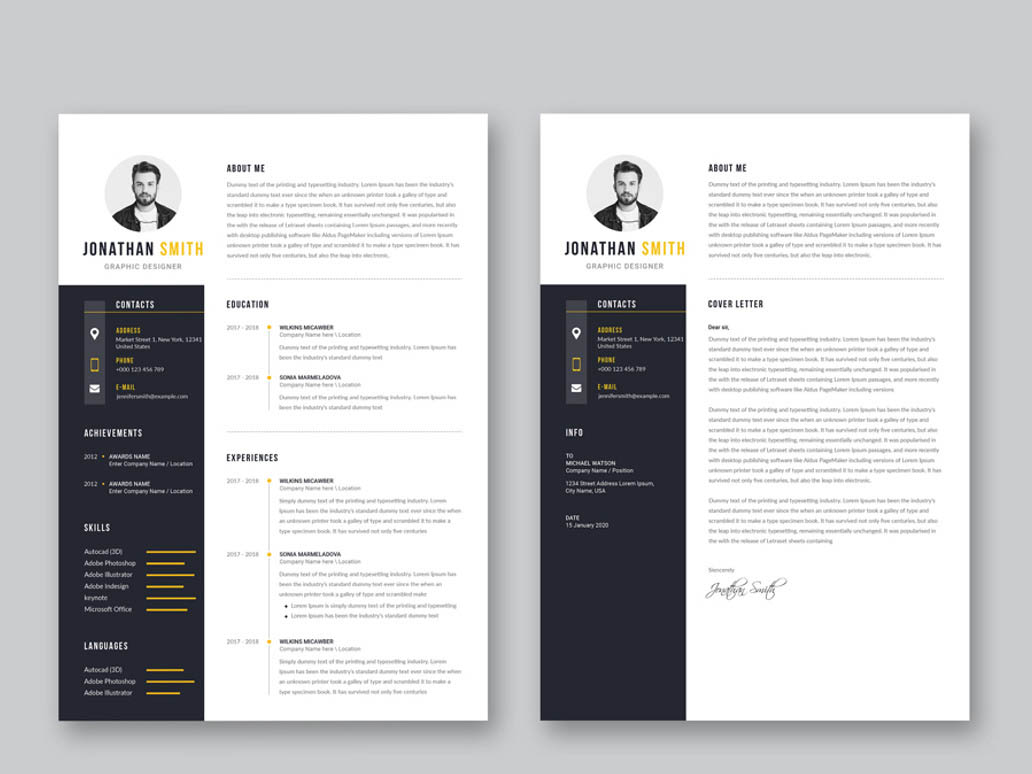
Financial institutions increasingly depend on sophisticated data analysis to understand markets, evaluate financial risks, improve operational efficiency, and develop predictive business strategies. Behind these capabilities are professionals who combine statistical knowledge, programming expertise, and financial understanding to turn complex datasets into useful decisions.
Financial Data Scientists occupy a distinctive position within this environment. Their work can involve developing machine learning models, analyzing transaction patterns, building forecasting systems, automating financial processes, and translating analytical findings into business recommendations.
The Financial Data Scientist Resume Template is designed for professionals working across these disciplines. Its clean corporate presentation provides a structured way to communicate technical qualifications, financial knowledge, project experience, and measurable contributions without overwhelming the reader with excessive visual elements.
Present Technical Work in a Business-Oriented Format
A Financial Data Scientist may work with sophisticated algorithms and large datasets, but recruiters also need to understand the practical purpose of that work. A resume should explain not only which technologies you use, but also the financial problems you have helped solve.
The template offers a structured foundation for presenting experience across several technical areas:
- Machine Learning: Predictive modeling, classification, regression, and model evaluation.
- Quantitative Research: Statistical methods, financial data analysis, and market research.
- Financial Forecasting: Revenue projections, cash flow modeling, and time-series analysis.
- Risk Analytics: Credit risk modeling, fraud detection, and financial risk measurement.
- Data Engineering: Data pipelines, transformation processes, and database management.
- Business Intelligence: Analytical dashboards, reporting automation, and performance monitoring.
- Artificial Intelligence: Applications of AI and advanced analytical methods in financial services.
- Financial Modeling: Quantitative analysis supporting investment, lending, and business decisions.
When describing these areas, connect technical responsibilities to their intended outcomes. For example, explain how a predictive model supported credit assessment or how an automated reporting process improved the availability of financial information.
Make Your Data Science Projects Count
Project experience can be especially important when applying for financial data science positions. Employers often want evidence that candidates can work with real-world datasets, select appropriate analytical methods, and communicate the limitations and implications of their findings.
Use the project and professional experience sections to describe relevant work such as:
Predictive Financial Modeling
Showcase forecasting models, customer behavior predictions, credit scoring systems, or other analytical applications. Include the modeling approach and evaluation methods where relevant.
Quantitative and Market Research
Highlight projects involving financial time series, statistical testing, portfolio analysis, market behavior, or systematic investment research.
Risk and Fraud Analytics
Describe work involving transaction monitoring, anomaly detection, default prediction, fraud identification, or financial risk assessment.
Data Infrastructure and Automation
Present experience building data pipelines, integrating financial datasets, automating recurring reports, or improving analytical workflows.
Business Intelligence and Decision Support
Include dashboards, visualization projects, performance reports, and analytical recommendations developed for finance teams or management.
For each project, explain the problem, your technical contribution, the methods or tools used, and the outcome. If you include performance metrics, such as model accuracy or processing-time improvements, provide enough context to make the figures meaningful.
Download Package and Editable Files
The template is supplied in multiple formats, providing flexibility for professionals who prefer office applications or graphic design software.
Included in the package:
- Microsoft Word (.DOCX)
- Microsoft PowerPoint (.PPT)
- Adobe Photoshop (.PSD)
- Adobe Illustrator (.AI/.EPS)
- Detailed Editing Guide
- Free Font Links
The files contain editable elements and organized design components, allowing users to personalize their resumes without creating the layout from the beginning.
The included guide explains the customization process, while the font links provide access to the typefaces used in the design.
Professional Design Specifications
Technical resumes can contain a substantial amount of information, particularly when candidates need to present programming languages, analytical tools, project details, and financial qualifications together.
This template uses a clean corporate design to maintain readability while supporting a professional visual identity.
Design features include:
- A4 international paper size
- CMYK print-ready format
- 300 DPI resolution
- Fully editable text and graphics
- Well-organized design layers
- ATS-conscious structure
- Professional typography
- Free font resources
- Clean corporate styling
- Multi-software compatibility
The layout is intended to make technical information easier to review while keeping the candidate’s experience at the center of the document.
ATS performance depends on the recruitment platform and the final file structure. After editing, check that text remains selectable and that technical skills, employment dates, and section headings appear in the correct reading order. A simplified text-based version may be useful when an employer specifically requires one.
Career Opportunities in Financial Data Science
The template can be adapted for a range of analytical and technology-focused positions across banking, investment management, insurance, consulting, and financial technology.
Financial Data Science and Analytics
- Financial Data Scientist
- FinTech Data Scientist
- Financial Data Analyst
- Banking Data Scientist
- Financial Analytics Specialist
- Investment Data Scientist
- Financial Research Data Scientist
Quantitative Finance and Investment Research
- Quantitative Research Analyst
- Quantitative Developer
- Quantitative Investment Analyst
- Algorithmic Trading Analyst
- Investment Analytics Specialist
- Quantitative Risk Analyst
- Financial Modeling Analyst
Machine Learning and Artificial Intelligence
- Financial Machine Learning Engineer
- AI Finance Specialist
- Predictive Analytics Consultant
- Machine Learning Research Analyst
- Financial AI Analyst
- Applied Data Scientist
- Intelligent Automation Specialist
Risk, Credit, and Financial Technology
- Risk Data Scientist
- Credit Risk Modeler
- Fraud Analytics Specialist
- Financial Data Engineer
- Risk Modeling Analyst
- FinTech Analytics Consultant
- Credit Analytics Specialist
Business Intelligence and Data Engineering
- Business Intelligence Analyst
- Financial Data Engineer
- Data Analytics Consultant
- Financial Reporting Analyst
- Data Platform Specialist
- Analytics Engineer
- Financial Systems Analyst
These positions may require different combinations of technical and financial expertise. Tailor your resume to the target role rather than presenting every skill as equally important.
Technical Skills to Feature on Your Resume
A strong Financial Data Scientist profile should demonstrate the ability to work with data, develop analytical solutions, and understand the financial context in which those solutions are applied.
The following skill groups can help organize your qualifications.
Programming and Data Management
- Python
- R
- SQL
- Data cleaning and preprocessing
- Database management
- Data pipeline development
- Data integration
- API-based data collection
Statistics and Quantitative Methods
- Statistical modeling
- Regression analysis
- Probability and hypothesis testing
- Time-series analysis
- Econometrics
- Monte Carlo simulation
- Optimization techniques
- Quantitative research
Machine Learning and AI
- Supervised learning
- Unsupervised learning
- Classification and regression
- Model validation
- Feature engineering
- Natural language processing
- Anomaly detection
- Predictive modeling
Financial and Risk Knowledge
- Financial statement analysis
- Credit risk assessment
- Portfolio analytics
- Market risk measurement
- Financial forecasting
- Fraud detection
- Investment research
- Financial modeling
Data Visualization and Business Intelligence
- Dashboard development
- Data visualization
- Business intelligence reporting
- Performance analytics
- Analytical storytelling
- Management reporting
Candidates should list tools and methods they can genuinely use. Where possible, support technical skills with projects, professional assignments, certifications, or links to relevant work.
How to Customize the Resume for Different Employers
Financial data science roles vary significantly depending on the organization. A commercial bank may prioritize credit risk and fraud analytics, while an investment firm may place greater emphasis on quantitative research and market modeling.
For banking and lending positions: Emphasize credit scoring, customer analytics, default prediction, fraud detection, and financial risk models.
For investment and asset management firms: Highlight quantitative research, portfolio analytics, market data analysis, forecasting, and systematic investment projects.
For insurance companies: Prioritize predictive modeling, claims analytics, risk assessment, customer segmentation, and actuarial data applications where relevant.
For fintech companies: Feature data engineering, machine learning applications, financial product analytics, automation, and scalable data solutions.
For consulting positions: Demonstrate analytical problem-solving, client-facing projects, business intelligence, technical communication, and the ability to translate complex findings into practical recommendations.
The template’s editable structure makes it possible to reorganize your content around the requirements of each application while maintaining a consistent professional appearance.
Software Compatibility and Editing Flexibility
Choose the application that best matches your editing preferences:
- Microsoft Word: Update written content, professional experience, education, certifications, and technical skills.
- Microsoft PowerPoint: Customize text and layout components through presentation software.
- Adobe Photoshop: Edit the PSD file and modify its organized design layers.
- Adobe Illustrator: Work with the AI/EPS version using vector editing tools.
The detailed editing guide provides additional instructions for customizing the files. You can also modify the content, fonts, and colors to suit your professional identity.
Before submitting your resume, check that programming languages are spelled correctly, project descriptions are understandable to non-technical recruiters, and any portfolio or GitHub links direct to relevant work. Remove outdated projects and prioritize examples that demonstrate your current capabilities.
Bring Finance and Technology Together in Your Career Profile
Financial Data Scientists are expected to do more than write code or develop statistical models. Their value comes from applying technical methods to financial challenges, interpreting results responsibly, and helping organizations make better-informed decisions.
The Financial Data Scientist Resume Template provides a professional foundation for communicating that combination of expertise. With multiple editable formats, production-ready specifications, and an organized corporate layout, it supports applications across quantitative finance, banking analytics, financial technology, machine learning, and risk modeling.
Use the template to connect your technical projects with their financial purpose, making it easier for recruiters to understand both the methods you know and the value you can bring to their organization.


Related Products


Same Contributor


Featured Products


