
Visual Designer Resume

For visual designers, a resume is an opportunity to demonstrate more than professional experience. It can also communicate an understanding of layout, visual, typography, visual hierarchy, and presentation. The Visual Designer Resume Template provides a creative starting point for professionals who want their career information presented in a visually engaging format.
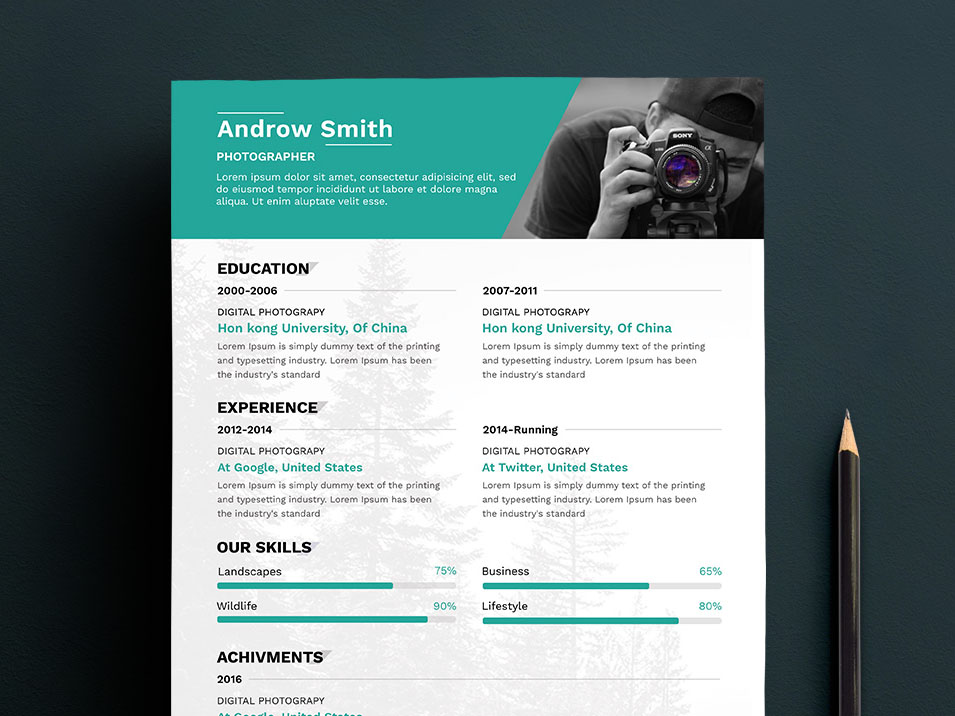
Designed with the needs of creative applicants in mind, this free resume template offers a distinctive layout with space for personal text and professional details. Its design aims to attract attention during an initial review while giving candidates room to explain their qualifications, employment history, and relevant skills.
The template is supplied in Adobe Photoshop (PSD) format, making it editable for users who want to personalize the document. It includes an A4 page setup with bleed, 300 DPI resolution, and CMYK color mode. The design also uses free fonts, giving users a practical starting point for preparing a customized, print-ready CV.
A Creative Layout for Visual Design Careers
Visual designers work with the relationship between images, typography, colors, and information. These principles are also important when creating a resume for a design-related position.
A creative CV can help establish a candidate’s visual identity before a hiring manager reviews their portfolio. The layout, spacing, and presentation contribute to the overall impression, while the written content explains the applicant’s experience and capabilities.
This template is intended for professionals who want something more expressive than a conventional text-based resume. Its creative appearance provides an opportunity to present career information in a way that reflects the visual nature of the industry.
However, visual appeal should not come at the expense of clarity. Keep your most important qualifications easy to locate and make sure the design supports the information rather than overwhelming it.
Editable PSD Format for Easy Customization
The Visual Designer Resume Template is available in PSD format, which can be edited using Adobe Photoshop. This gives users the flexibility to personalize the document without having to recreate the entire layout.
You can replace the sample information with your own details and adjust the content to reflect your professional background. The template is also fully customizable, allowing you to make changes that suit your career goals and preferred presentation.
Possible customization tasks include:
- Replacing sample text with your professional information
- Updating employment history and educational details
- Adjusting the content to suit a specific design position
- Modifying compatible visual elements
- Refining the layout to accommodate your experience
- Reviewing typography and spacing after editing
If you are unfamiliar with PSD files, start by opening the document in Photoshop and reviewing its layers. Save a separate working copy before making changes so you can preserve the original template.
A4 Page Size with Bleed and Print Preparation
The simple template is configured for A4 paper size with bleed, making it suitable for a print-oriented resume workflow. Its 300 DPI resolution and CMYK color mode are also relevant to professional printing.
These specifications help prepare the document for physical output, particularly when design elements extend toward the page edges. The bleed area provides additional artwork beyond the final trimming boundary.
The listed specifications include:
- Page size: A4 with bleed
- Resolution: 300 DPI
- Color mode: CMYK
- Design style: Creative and professional
- Customization: Fully customizable
- Font use: Free fonts only
- File format: PSD
- Output: Print ready
- Availability: Instant download
Before sending the resume to a print provider, check the page dimensions, bleed settings, and export requirements. It is also important to inspect the final document at its intended print size to confirm that all text remains readable.
Who Can Use This Visual Designer CV?
Although the template is intended for visual designers, its creative layout can be adapted for several related professions. The most suitable use depends on the candidate’s experience and the expectations of the employer.
Visual Designers
Visual designers can use the template to introduce their experience in developing visual concepts, digital assets, and communication materials. Relevant projects and design responsibilities can help demonstrate their professional capabilities.
Graphic Designers
Graphic designers can highlight experience with branding, promotional materials, editorial layouts, and other visual communication projects. Software knowledge and selected achievements can provide useful context.
Brand Designers
Applicants working in brand design can focus on identity systems, visual guidelines, logo development, and brand consistency across different applications.
Digital Designers
Digital designers may emphasize website graphics, digital campaigns, interface assets, and collaboration with marketing or product teams.
UI Designers
User interface designers can present experience with interface layouts, design systems, prototyping, and collaboration with developers. A portfolio link can provide additional evidence of their design approach.
Art Directors
Art direction candidates can highlight creative leadership, concept development, project supervision, and coordination with creative teams.
Illustrators and Layout Designers
Illustrators can focus on commissioned artwork, visual storytelling, and illustration projects, while layout designers may emphasize typography, publication design, and information organization.
These are possible career applications rather than fixed categories. You can adapt the content to other creative positions when the visual presentation is appropriate.
What to Include in a Visual Designer Resume
A creative resume should communicate both professional experience and practical design capabilities. Hiring managers need to understand what you have worked on, which skills you bring, and how your experience relates to the position.
Professional introduction
Write a concise summary explaining your design background, area of specialization, and professional direction. Avoid generic statements and focus on the type of design work you can contribute.
Work experience
List relevant roles and describe your responsibilities through clear, achievement-oriented statements. Include the types of projects you handled, the teams you worked with, and any results that demonstrate your contribution.
Design skills
Choose skills that match your experience and target role. These might include visual communication, typography, layout design, color theory, brand identity, digital design, or image editing.
Software proficiency
Mention the applications you genuinely use. Depending on your specialization, these may include Adobe Photoshop, Adobe Illustrator, Adobe InDesign, Figma, or other relevant tools.
Education and training
Include degrees, design courses, certifications, workshops, and other professional development that supports your qualifications.
Portfolio
A portfolio is particularly important for visual design roles. Add a link to a professional website or online portfolio where employers can review examples of your work. Select projects that demonstrate relevant skills rather than including every piece you have created.
Tips for Customizing Your Creative Resume
A distinctive design can help your application stand out, but the final document should remain focused and easy to review. Consider the following suggestions when editing the PSD file.
Give priority to relevant projects. Choose experience that demonstrates your suitability for the position. If you have worked across several design disciplines, emphasize the projects most closely related to the vacancy.
Use concise descriptions. Explain your responsibilities and contributions without turning the resume into a long project report. Specific details are more useful than broad claims about creativity or talent.
Maintain visual consistency. Keep typography, spacing, and alignment consistent throughout the document. Even a creative layout benefits from a clear visual system.
Check the included fonts. Since the template uses free fonts, make sure the required typefaces are available before editing. Missing fonts can change text dimensions and affect the original layout.
Avoid overcrowding. The template provides space for your own text, but this does not mean every section needs to be filled. Remove information that does not support your application.
Review the exported document. Inspect the final version for spelling errors, missing text, inconsistent spacing, and other layout issues. Check both the editable PSD file and the exported version before submitting.
Using a Creative Resume for Digital Applications
A visually designed CV can be useful when applying for creative positions, but it is important to consider how the employer processes applications.
Some organizations use applicant tracking systems (ATS) to extract information from uploaded documents. Complex layouts, graphic elements, and text embedded in images may affect how certain systems interpret the content.
If a vacancy specifically requests a plain-text or machine-readable resume, prepare a separate version with a conventional structure. The creative PSD design can be used for applications where a visually formatted document is accepted.
Also check the required submission format. PSD is the source editing format, but an employer may request a PDF or another file type. Export the finished resume accordingly and verify that the exported document displays correctly.
Make Your Design Experience Stand Out
The Visual Designer Resume Template offers a creative foundation for professionals who want to present their qualifications through a distinctive layout. Its editable PSD format makes customization possible, while the A4 page setup with bleed, 300 DPI resolution, and CMYK color mode supports print preparation.
With space for personal text, free font use, and a fully customizable design, the template can be adapted to different visual communication careers. Whether you work in graphic design, branding, digital design, illustration, or art direction, it provides a starting point for organizing your professional story.
Use the design to introduce your experience, highlight relevant projects, and direct hiring managers to your portfolio. A thoughtful combination of visual presentation and clear career information can help create a resume that represents your work professionally.
Template credit: Special thanks to Mari Ji Young Heo for providing this free resume template.


Related Products


Same Contributor


Featured Products


